
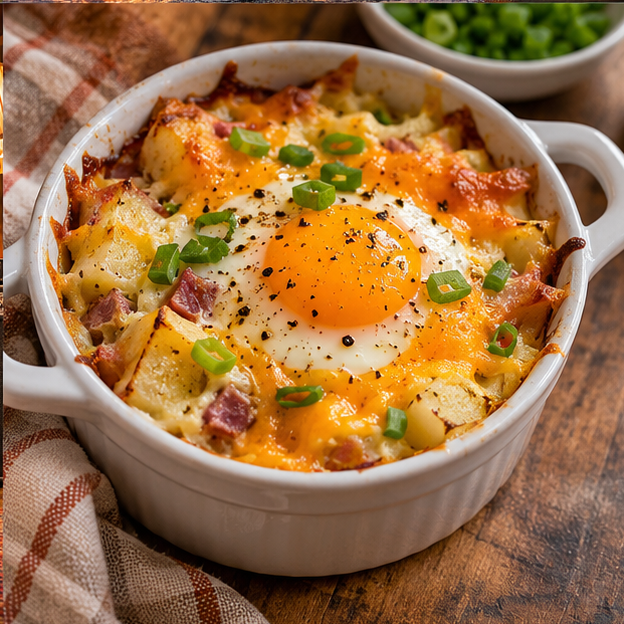
I did not expect leftover potato salad to work this well with a raw egg. I expected a possible hot-mayonnaise problem, a loose egg, or a muddled casserole. Instead, the dressing disappeared, the egg stayed distinct and cooked cleanly, and the potatoes became lightly browned, creamy breakfast potatoes beneath cheddar.
The result was so good that this is no longer merely a way to use leftovers. It is a reason to make extra potato salad.
What made the potatoes different
These were homemade potato-salad potatoes, cut into roughly 3/4-inch chunks, cooked to about 203°F, and spread on a cookie sheet to cool. That method gave them creamy interiors, dry enough surfaces to hold their shape, and excellent texture after refrigeration and a second cooking.
The potato salad included scallions and celery. The scallions improved the egg-and-cheddar combination, while the celery did not hinder the texture or flavor at all.
Ingredients
For each egg portion:
* Cold homemade potato salad, about four 3/4-inch potato chunks
* 1 large egg
* About 2 tablespoons shredded cheddar
* Olive-oil spray
* Freshly ground black pepper
Method
1. Lightly spray an individual egg-baking cup, muffin-style cup, or small oven-safe dish with olive oil.
2. Arrange about four cold potato-salad chunks in a shallow layer, leaving small spaces between them.
3. Crack one raw egg directly over the potatoes. Do not stir or mix it into the salad.
4. Top with shredded cheddar and plenty of black pepper.
5. Cook in a Weber June countertop smart oven using the Fried Egg preset. My cycle appeared to run for approximately nine minutes, but I did not record the exact temperature.
6. Remove when the egg white is fully set and the yolk has reached your preferred consistency.
What happened in the oven
The egg did not blend into the potato salad. The 3/4-inch potato chunks formed a shallow cradle, the egg pooled naturally in the spaces between them, and the white set as a distinct baked egg.
The dressing stopped behaving like dressing. Its fat helped the potatoes brown slightly, moisture cooked away, and the mustard, vinegar, salt, and seasonings remained as an almost invisible flavor layer. The finished dish did not taste like warmed potato salad.
It tasted like exceptionally well-seasoned breakfast potatoes with a baked egg and melted cheddar.
Why it worked
The potatoes were already unusually good before they entered the oven: fully cooked, creamy inside, cooled on a sheet pan, dressed, refrigerated, and firm enough to survive reheating without collapsing.
The scallions belonged naturally with the egg and cheese. The celery remained in the background. The dressing vanished into the cooking process. The potatoes browned a little, the egg cooked independently, and the cheddar formed a savory cap.
Great potatoes plus egg is culinary physics. The surprise was discovering that leftover potato salad could shed its salad identity so completely and reveal that combination underneath.
Recipe note
The Weber June Fried Egg preset manages the cooking cycle automatically, so the exact temperature was not recorded. Use the egg’s doneness as the primary guide: the white should be fully set, while the yolk can remain soft or cook further according to preference.